In many drilling projects, buyers first ask about drilling depth, hole diameter, machine power, or drilling rig price. These questions are important, but they are not enough to build a reliable drilling solution. In real quarry, mining, water well, and construction drilling projects, one factor can change the whole equipment configuration: rock hardness.
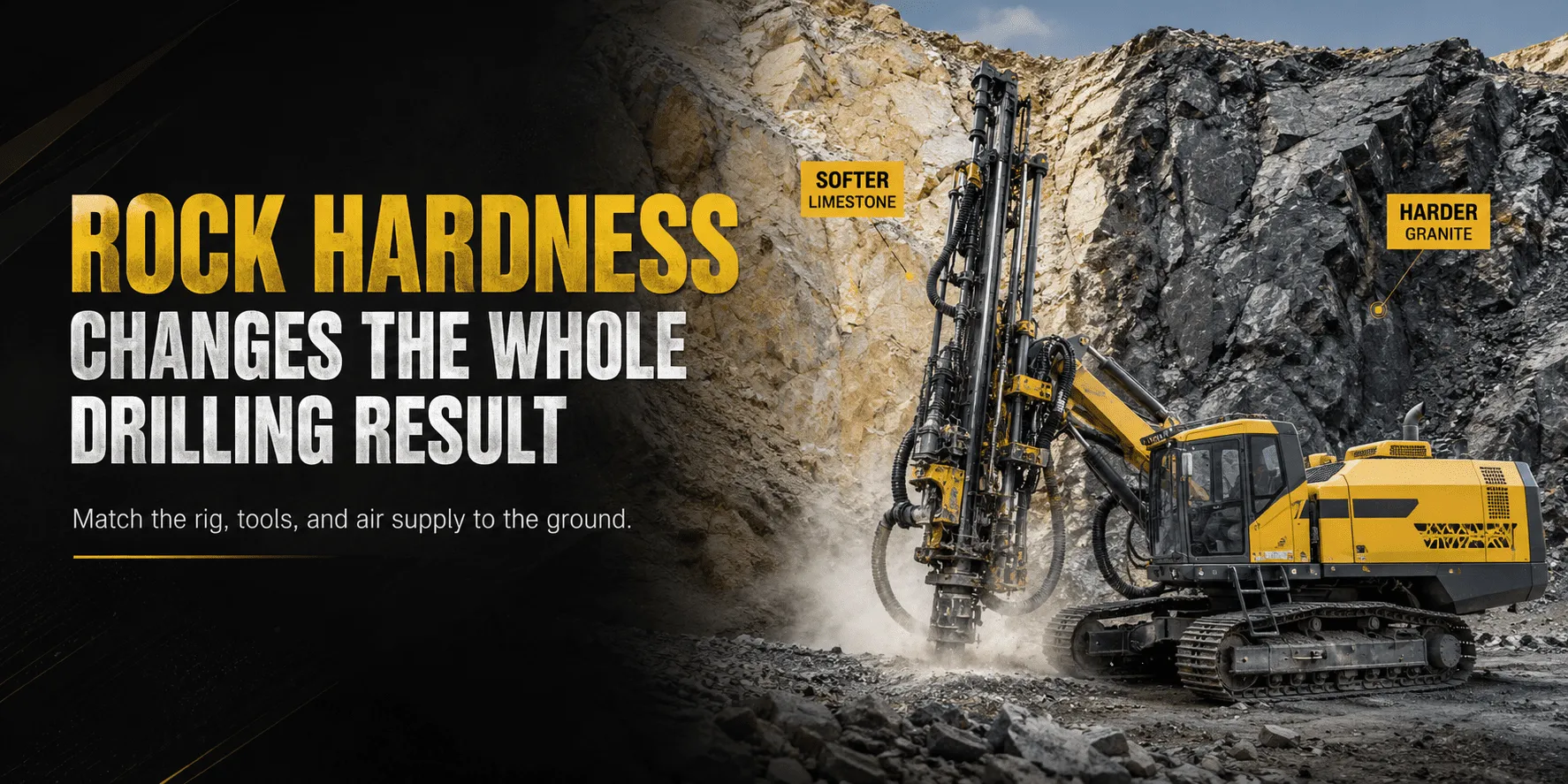
A drilling rig that works well in soft limestone may perform very differently in hard granite. A drill bit that lasts long in medium-hard rock may wear quickly in abrasive formations. An air compressor that supports shallow drilling may not provide enough air volume for deeper holes or harder rock conditions.
That is why rock hardness affects drilling performance in a direct and practical way. It influences penetration rate, DTH hammer impact, drill bit life, air compressor demand, fuel consumption, downtime risk, and total project cost.
Why Rock Hardness Should Be Checked Before Equipment Selection
Drilling equipment should not be selected only by machine model or maximum drilling depth. The same drilling depth can require very different configurations when the rock condition changes.
For example, a 100-meter hole in soft limestone does not create the same working pressure as a 100-meter hole in hard granite. A quarry project in abrasive rock may require more durable drill bits and a stronger spare parts plan. A water well project with mixed soil, gravel, limestone, and rock layers may require more flexible tool preparation.
In real drilling projects, poor performance often does not come from the drilling rig alone. It usually comes from a mismatch between the machine, the ground condition, the DTH hammer, the drill bit, the air compressor, and the project requirement.
How Rock Hardness Changes Drilling Performance
Rock hardness affects how easily the drill bit can break the formation. The harder the rock, the more impact energy is required from the DTH hammer. The stronger the impact requirement, the more important air compressor matching becomes.
| Rock Condition | Impact on Drilling | Equipment Selection Focus |
| Soft Formation | Usually easier penetration, but hole cleaning still matters | Stable drilling speed and suitable air volume |
| Medium-Hard Rock | Requires balanced hammer impact and tool durability | Correct DTH hammer, drill bit, and compressor matching |
| Hard Rock | Lower penetration rate and higher impact demand | Stronger hammer energy, durable bits, and higher air support |
| Abrasive Rock | Fast drill bit and tool body wear | Wear-resistant drill bits and enough spare parts |
| Mixed Ground | Formation changes during drilling | Flexible tool selection and practical project preparation |
Penetration Rate: The First Performance Signal
Penetration rate is one of the most visible results affected by rock hardness. When the rock is harder, the drill bit needs more impact energy to break the formation. If the hammer, compressor, and drill bit are not suitable, the penetration rate may drop quickly.
Slow drilling does not only mean lower efficiency. It also means longer working hours, higher fuel consumption, more operator time, more tool wear, and slower project delivery.
This is why buyers should not only ask whether a rig can drill to a certain depth. They should also ask whether the complete drilling system can maintain a practical drilling speed under the real rock condition.
Rock Hardness and DTH Hammer Selection
The DTH hammer is responsible for delivering impact energy to the drill bit. In harder rock, the hammer must provide enough impact force to break the formation effectively. If the hammer is too small or not matched with the hole diameter and compressor capacity, drilling efficiency can drop.
| Selection Point | Why It Matters | Possible Problem if Wrong |
| Hammer Size | Must match hole diameter and rock hardness | Weak impact or unstable drilling |
| Air Consumption | Must match compressor pressure and air volume | Hammer cannot work at proper performance |
| Impact Energy | Hard rock needs stronger breaking power | Slow penetration and higher fuel cost |
| Hammer Compatibility | Must match drill bit shank and drilling tools | Connection issues and abnormal wear |
For hard rock quarry drilling, the DTH hammer and drill bit should be selected together. Choosing only by price or general size may lead to poor impact transfer, fast tool wear, or unstable drilling performance.
Rock Hardness and Drill Bit Wear
Drill bits directly contact the rock, so they are strongly affected by hardness and abrasiveness. In hard rock, the buttons face higher impact load. In abrasive rock, the bit body and buttons can wear faster. In mixed ground, the bit may face changing conditions within the same project.
A cheaper drill bit may look attractive in the quotation stage. However, if it wears too fast, the real cost can increase through frequent replacement, lower drilling speed, more downtime, and urgent spare parts demand.
| Rock Type | Common Tool Problem | Better Preparation |
| Limestone | Medium wear, depending on hardness and cracks | Use suitable button bit and maintain stable air flushing |
| Granite | High impact load and slower penetration | Use durable DTH bits and stronger hammer matching |
| Sandstone | Possible abrasive wear and unstable cuttings removal | Match air volume and prepare wear-resistant tools |
| Abrasive Rock | Fast button and bit body wear | Focus on tool life and spare bit planning |
| Mixed Layers | Changing drilling resistance and tool wear | Prepare flexible drilling tools and backup options |
Rock Hardness and Air Compressor Matching
In DTH drilling, the air compressor is not only used for air supply. It powers the hammer, removes cuttings, supports hole cleaning, and helps keep drilling stable. When rock hardness increases, the drilling system often needs stronger and more stable air support.
If the air pressure is not enough, the hammer impact may become weak. If the air volume is not enough, cuttings cannot be removed smoothly from the hole. Poor cuttings removal can increase resistance, reduce drilling speed, and accelerate tool wear.
| Compressor Factor | Connection with Rock Hardness | Possible Risk if Mismatched |
| Air Pressure | Supports DTH hammer impact energy | Weak hammer performance in hard rock |
| Air Volume | Supports cuttings removal and hole cleaning | Poor slag removal and unstable drilling |
| Compressor Size | Must match hammer, depth, and hole diameter | Too small reduces efficiency; too large increases fuel cost |
| Diesel or Electric Type | Depends on site mobility and power condition | Wrong choice may increase operating difficulty |
The best compressor is not always the biggest one. The best compressor is the one that matches the hole diameter, drilling depth, DTH hammer air demand, rock condition, and site environment.
Soft Rock, Hard Rock, and Abrasive Rock Require Different Decisions
Different rock conditions need different equipment priorities. A practical drilling solution should not use the same configuration for every project.
Soft to Medium-Hard Rock
In soft to medium-hard formations, the main goal is usually stable drilling speed and efficient cuttings removal. The equipment does not always need the highest pressure or the heaviest tool configuration. Instead, buyers should focus on balanced performance, fuel efficiency, and suitable tool matching.
Hard Rock
Hard rock drilling requires stronger impact energy, suitable DTH hammer size, durable drill bits, and stable compressor support. If the equipment is under-configured, penetration rate may become too low and operating cost may increase.
Abrasive Rock
In abrasive rock, tool wear becomes a major cost factor. Buyers should not only evaluate machine price. They should calculate drill bit life, replacement frequency, spare parts preparation, and cost per meter.
Mixed Ground Conditions
Mixed ground conditions are common in water well and construction projects. The formation may change from soil to gravel, limestone, sandstone, or hard rock. In this case, the drilling equipment package should be flexible enough to handle changing resistance and tool wear.
How Rock Hardness Affects Total Project Cost
Rock hardness does not only affect drilling speed. It affects the whole cost structure of the project. If the equipment is not matched correctly, buyers may face hidden costs after the machine starts working.
| Cost Area | How Rock Hardness Affects It | Project Impact |
| Fuel Consumption | Harder rock may require longer working time and stronger air support | Higher daily operating cost |
| Tool Wear | Hard or abrasive rock increases drill bit and hammer wear | Higher replacement cost |
| Downtime | Wrong tool matching can cause frequent replacement or failure | Delayed project progress |
| Labor Cost | Slow drilling increases working hours | Higher project execution cost |
| Maintenance | High load conditions increase maintenance demand | More service and spare parts pressure |
This is why the lowest equipment quotation is not always the most economical choice. If the rig, compressor, hammer, drill bit, and rods are not matched to the rock condition, the real project cost may become higher.
Quarry Drilling: Why Rock Hardness Matters More
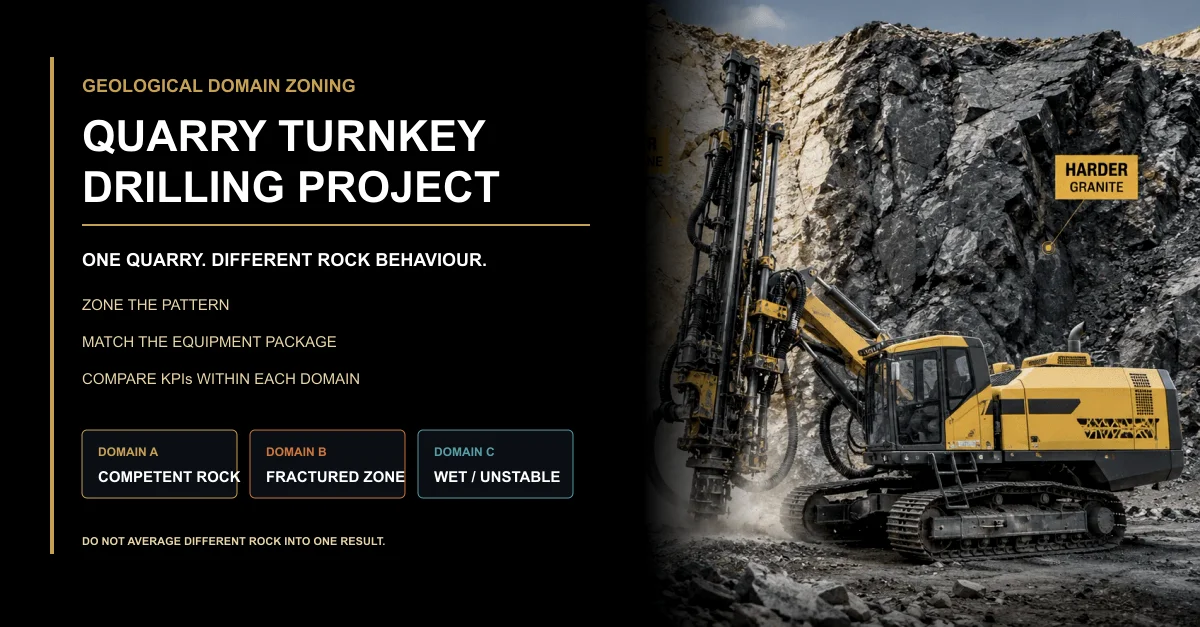
Quarry drilling usually involves limestone, granite, hard rock, and blasting hole applications. These projects often require continuous operation, stable hole quality, and predictable drilling output.
For quarry projects, rock hardness affects drilling speed, bit life, hammer performance, compressor demand, and blasting preparation. A weak configuration may slow down the whole production process.
A practical quarry drilling solution should match the drilling rig, high-pressure air compressor, DTH hammer, drill bit, drill rods, and spare parts according to the actual rock condition.
Water Well Drilling: Why Mixed Ground Must Be Considered
Water well drilling projects are often more unpredictable than quarry drilling. The drilling team may face soil, sand, gravel, limestone, sandstone, or rock layers in the same hole. This makes tool preparation and compressor matching very important.
If the equipment is selected only by maximum drilling depth, it may not handle changing ground conditions efficiently. The project may face slow drilling, poor cuttings removal, frequent tool changes, or unstable hole performance.
A complete water well drilling solution should consider drilling depth, hole diameter, ground layers, compressor matching, DTH tools, drill rods, and spare parts together.
Common Mistakes When Buyers Ignore Rock Hardness
Many drilling problems can be reduced if rock condition is confirmed before equipment selection. Buyers should avoid the following mistakes.
| Common Mistake | Possible Problem | Better Solution |
| Choosing rig only by drilling depth | The machine may not match hard rock or abrasive conditions | Confirm rock hardness, hole diameter, and drilling method first |
| Ignoring compressor matching | Weak hammer impact and poor cuttings removal | Match pressure and air volume with hammer and rock condition |
| Using the wrong drill bit | Fast wear, slow drilling, and unstable hole quality | Select bit structure according to hardness and abrasiveness |
| No spare parts plan | Small tool problems may stop the whole project | Prepare drill bits, hammer parts, filters, and wearing parts |
| Only comparing machine price | Hidden cost appears after operation starts | Evaluate total cost, including fuel, tools, downtime, and maintenance |
What Information Should Buyers Provide Before Selection?
To recommend a suitable drilling equipment package, buyers should provide clear project information. This helps avoid general recommendations and improves equipment matching accuracy.
- Project type: quarry, mining, water well, construction, or exploration
- Required hole diameter
- Required drilling depth
- Rock type: limestone, granite, sandstone, gravel, mixed layers, or other formations
- Rock hardness and abrasiveness if available
- Required drilling method: DTH drilling, top hammer drilling, or other method
- Site condition: open quarry, mountain area, remote site, or construction site
- Power condition: diesel preferred or electric power available
- Expected working hours and project duration
- Spare parts and maintenance requirements
How Welldone Mining Helps Match Equipment to Rock Conditions
Welldone Mining provides drilling equipment solutions for quarry, mining, water well, construction, and customized drilling projects. We help buyers match drilling rigs, air compressors, DTH hammers, drill bits, drill rods, and spare parts according to real project conditions.
Instead of recommending equipment only by model name, we focus on project matching. Rock condition, hole diameter, drilling depth, working environment, and long-term cost should all be considered before choosing the final configuration.
| Welldone Mining Support | How It Helps Buyers |
| Rock Condition Analysis | Helps understand hardness, abrasiveness, and formation changes |
| Drilling Rig Selection | Matches machine capacity with project type and hole requirements |
| Air Compressor Matching | Matches pressure and air volume with DTH hammer and drilling depth |
| DTH Tool Configuration | Selects hammer, drill bit, and drill rods according to rock condition |
| Spare Parts Planning | Prepares drill bits, hammer parts, filters, and wearing parts for continuous operation |
| After-Sales Guidance | Supports technical communication, troubleshooting, and maintenance advice |
Conclusion
Rock hardness is not just a site detail. It changes the whole drilling result. It affects penetration rate, hammer impact, drill bit wear, compressor demand, fuel consumption, downtime risk, and total project cost.
For quarry projects, hard rock and abrasive rock require stronger equipment matching and better spare parts preparation. For water well projects, mixed ground layers require flexible tool selection and stable compressor support. For customized projects, the whole drilling system should be built around the real site condition.
The smarter choice is not only asking how deep the drilling rig can drill. The smarter choice is asking whether the complete drilling system can work efficiently in the rock it will actually face.
If you are planning a drilling project, you can share your project type, hole diameter, drilling depth, rock condition, site environment, power condition, and expected working hours. Welldone Mining can help you match the suitable drilling rig, air compressor, DTH hammer, drill bit, drill rods, spare parts, and after-sales support for your project.
Website: www.welldonemining.com
Email: info@welldonemining.com