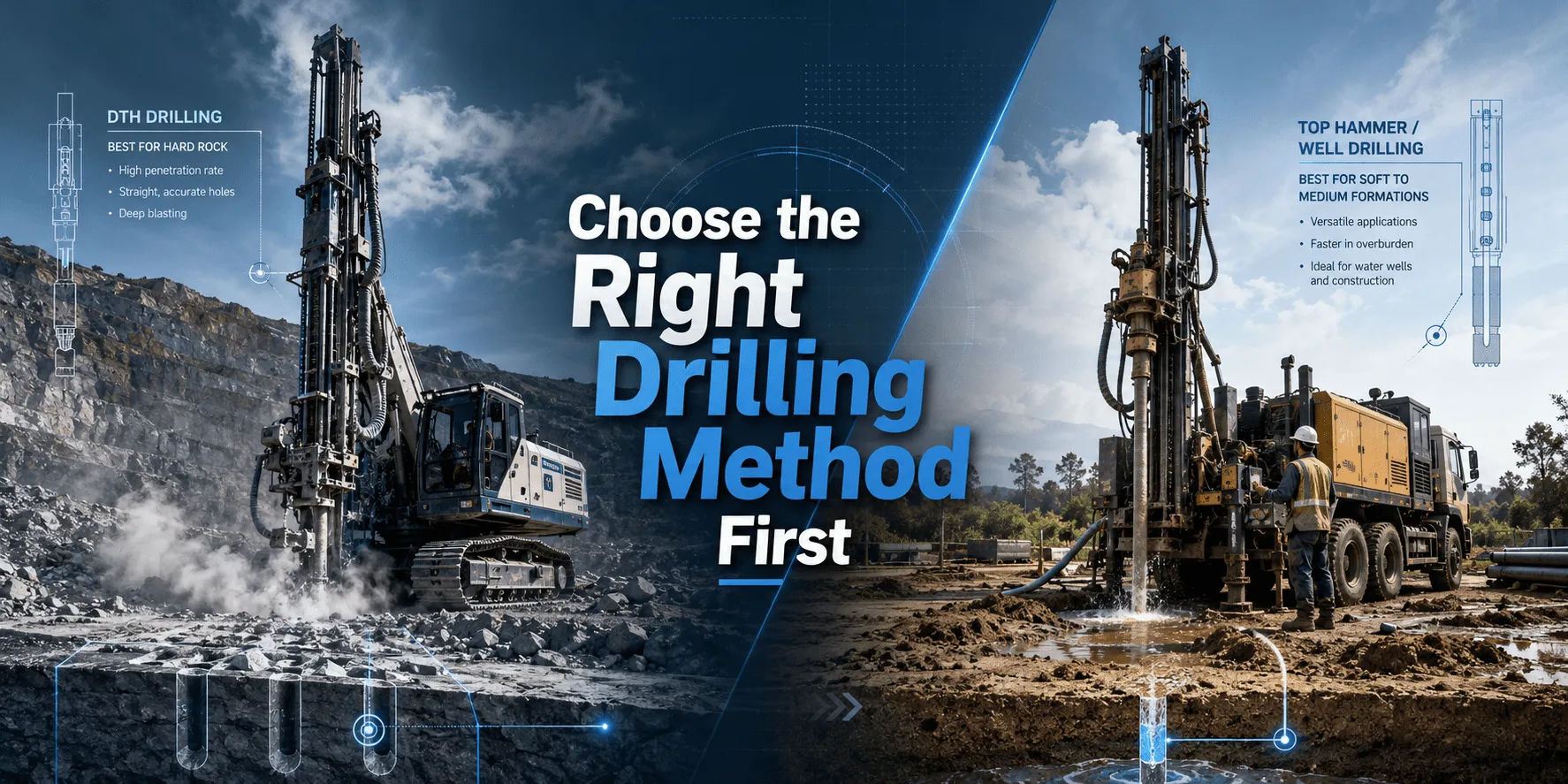
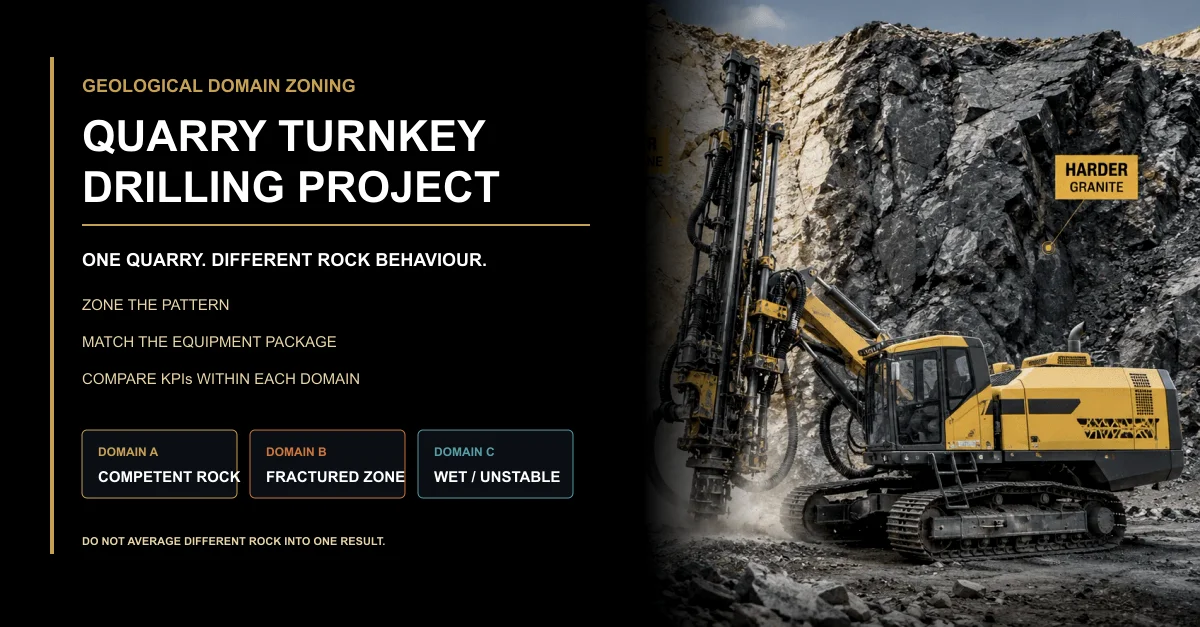
In many drilling projects, buyers start by asking one question:
Which drilling rig should I choose?
This is an important question, but it may not be the first question.
Before choosing the machine model, buyers should confirm something more basic:
which drilling method fits the project?
A drilling rig can only perform well when the drilling method matches the real site condition.
Different drilling methods are suitable for different rock formations, hole diameters, drilling depths, working environments, and project goals.
If the drilling method is wrong from the beginning, even a strong drilling rig may face slow penetration, poor hole quality, high tool wear, unstable operation, unmatched compressor demand, and higher project cost.
Why Drilling Method Should Come Before Machine Selection
Choosing a drilling rig only by maximum drilling depth or machine price can be risky.
The same depth may require different drilling methods when the rock condition, hole diameter, and application change.
For example, quarry hard rock drilling may need strong impact power and efficient cuttings removal.
A water well project may face mixed soil, gravel, limestone, and deeper rock layers.
A construction project may need better hole accuracy, site flexibility, or stable drilling in limited working space.
In real drilling projects, the right equipment is not only about one machine.
It is about choosing the right drilling method first, then matching the drilling rig, air compressor, DTH hammer, drill bit, drill rods, and spare parts around that method.
Main Drilling Methods Buyers Should Understand
Different drilling methods have different advantages and limitations.
Buyers do not need to become drilling engineers, but they should understand the basic differences before making a purchasing decision.
| Drilling Method |
Common Application |
Main Selection Focus |
| DTH Drilling |
Quarry, mining, hard rock, blasting holes, water well rock layers |
Impact power, air compressor matching, DTH hammer and drill bit |
| Top Hammer Drilling |
Surface rock drilling, quarry drilling, construction drilling |
Fast drilling in suitable depth range and efficient rock breaking |
| Rotary Drilling |
Water well, soft formations, soil, sand, and mixed layers |
Rotation, flushing method, formation stability, and depth demand |
| Core Drilling |
Exploration and geological sampling |
Core sample quality, drilling accuracy, and formation information |
| Customized Drilling Setup |
Mixed applications, special site conditions, remote projects |
Project-specific matching of rig, tools, compressor, and spare parts |
DTH Drilling: Suitable for Hard Rock and Deeper Rock Drilling
DTH drilling is widely used in quarry, mining, hard rock drilling, blasting holes, and some water well drilling projects.
In this method, the DTH hammer works down the hole and transfers impact energy directly to the drill bit.
This makes DTH drilling useful when the project requires strong impact power, stable penetration in hard rock, and efficient drilling at certain depths.
However, DTH drilling depends strongly on air compressor matching.
If the air pressure or air volume is not suitable, the hammer cannot work efficiently.
| DTH Drilling Factor |
Why It Matters |
Possible Problem if Ignored |
| DTH Hammer Size |
Must match hole diameter and rock hardness |
Weak impact or unnecessary air consumption |
| Drill Bit Diameter |
Controls final hole size and rock-breaking contact |
Poor hole quality or fast tool wear |
| Air Pressure |
Supports hammer impact performance |
Slow penetration in hard rock |
| Air Volume |
Supports cuttings removal and hole cleaning |
Poor slag removal and unstable drilling |
| Drill Rods |
Transfer air and torque to the hammer |
Air loss, unstable connection, or downtime |
Top Hammer Drilling: Suitable for Certain Surface Rock Applications
Top hammer drilling is also used in quarry, mining, construction, and surface rock drilling projects.
Unlike DTH drilling, the impact mechanism is located on the rig and the impact energy is transferred through the drill rods to the bit.
Top hammer drilling can be efficient for certain hole depths and rock drilling applications.
It may be suitable when the project requires faster drilling in shallower or medium-depth holes.
However, as depth increases, energy transfer through the rods may become less efficient compared with DTH drilling in some hard rock conditions.
This is why buyers should not choose between DTH and top hammer only by machine appearance.
The choice should depend on hole diameter, drilling depth, rock hardness, required hole quality, and operating cost.
DTH Drilling vs Top Hammer Drilling
DTH drilling and top hammer drilling are both used for rock drilling, but they are not the same.
Each method has its own suitable conditions.
A wrong choice may reduce drilling speed, increase tool wear, or create unnecessary cost.
| Comparison Item |
DTH Drilling |
Top Hammer Drilling |
| Impact Position |
Hammer works down the hole near the drill bit |
Impact unit is on the rig and energy passes through rods |
| Common Strength |
Stable impact for hard rock and deeper holes |
Fast drilling in suitable surface rock applications |
| Air Requirement |
Requires suitable air pressure and air volume |
Air demand depends on drilling system and flushing need |
| Tool Matching |
DTH hammer, DTH bit, drill rods, compressor |
Rock drill, rods, shank adapter, bit, flushing system |
| Selection Risk |
Wrong compressor matching reduces hammer performance |
Wrong depth or rod matching reduces energy transfer |
Water Well Drilling Method Depends on Ground Layers
Water well drilling is different from simple rock drilling.
The project may pass through soil, sand, gravel, limestone, sandstone, or hard rock layers in the same hole.
Because the formation changes, the drilling method and equipment package must be selected carefully.
Some water well projects may need air DTH drilling when rock layers are strong.
Some projects may need rotary drilling or mud support when the formation is loose, soft, or unstable.
Some sites may require a practical combination according to depth, casing plan, ground condition, and water source target.
A complete water well drilling solution should consider ground layers, hole diameter, depth requirement, compressor support, drilling tools, drill rods, and spare parts together.
Quarry Drilling Method Depends on Rock and Blasting Requirement
Quarry drilling projects usually focus on blasting holes, production efficiency, rock hardness, hole quality, and drilling cost per meter.
The drilling method must match the quarry rock condition and blasting requirement.
For hard rock quarry drilling, DTH drilling is often selected because it can provide strong impact energy and stable drilling performance.
For some surface drilling applications, top hammer drilling may also be suitable depending on depth, hole diameter, and production target.
A practical quarry drilling solution should not only recommend a rig model.
It should match drilling method, rig capacity, air compressor, hammer or rock drill, drill bit, drill rods, and wearing parts according to actual quarry conditions.
Construction and Foundation Projects Need More Site Consideration
Construction, foundation, slope support, anchoring, and engineering drilling projects may have special requirements.
The site may have limited working space, strict hole accuracy, different drilling angles, or unstable ground conditions.
In these projects, the best drilling method depends not only on rock hardness.
It also depends on site access, machine mobility, working angle, hole stability, environmental condition, and project schedule.
For special applications, a customized drilling solution can help buyers evaluate the drilling method and equipment configuration before purchasing.
Key Factors Before Choosing a Drilling Method
Before choosing the drilling rig, buyers should first confirm the project information.
This helps avoid general recommendations and reduces the risk of choosing the wrong equipment package.
| Selection Factor |
What to Confirm |
Why It Matters |
| Project Type |
Quarry, mining, water well, construction, foundation, or exploration |
Different applications need different drilling methods |
| Hole Diameter |
Required final hole size |
Affects drill bit, hammer size, rod selection, and compressor demand |
| Drilling Depth |
Target working depth and stable depth range |
Affects rig capacity, rod configuration, and method selection |
| Rock Condition |
Soft formation, hard rock, abrasive rock, or mixed ground |
Affects impact demand, tool wear, and drilling speed |
| Cuttings Removal |
Air, water, mud, or other flushing condition |
Affects hole cleaning and drilling stability |
| Site Environment |
Open quarry, remote site, mountain area, or limited space |
Affects rig mobility, compressor type, and transport planning |
| Operating Cost |
Fuel, tools, downtime, maintenance, and spare parts |
Determines long-term project cost, not only machine price |
How Wrong Drilling Method Selection Increases Project Cost
Choosing the wrong drilling method can create hidden costs after the machine starts working.
These costs may not appear in the initial quotation, but they can strongly affect project profit.
| Wrong Selection Result |
Possible Cause |
Cost Impact |
| Slow Penetration |
Method does not match rock hardness or depth |
More working hours and higher fuel cost |
| Poor Hole Quality |
Wrong tool or unstable drilling method |
Project rework and lower drilling accuracy |
| Fast Tool Wear |
Wrong hammer, bit, rod, or rock matching |
Higher replacement cost and more downtime |
| Compressor Mismatch |
DTH method selected without air demand calculation |
Weak hammer impact or unnecessary fuel cost |
| Unstable Operation |
Method does not fit site condition or ground layers |
Delayed schedule and maintenance pressure |
Why the Drilling Method and Equipment Package Should Be Selected Together
The drilling method decides the equipment package.
Once the method is confirmed, the drilling rig, air compressor, drilling tools, drill rods, and spare parts can be matched more accurately.
For DTH drilling, buyers need to focus on hammer size, drill bit diameter, compressor pressure and air volume, drill rod stability, and spare hammer parts.
For top hammer drilling, buyers need to consider rock drill performance, rod energy transfer, bit matching, and suitable drilling depth.
For water well drilling, buyers should consider formation changes, flushing method, casing plan, compressor support, and tool flexibility.
As I see it, better drilling performance does not start from choosing the most powerful machine.
It starts from choosing the right drilling method for the real project condition.
Common Mistakes Buyers Should Avoid
Many drilling problems can be reduced if buyers confirm the drilling method before purchasing.
The following mistakes are common in drilling equipment selection.
| Common Mistake |
Possible Problem |
Better Solution |
| Choosing rig only by price |
Machine may not match the project method |
Confirm drilling method and site condition first |
| Only asking for drilling depth |
Depth alone cannot decide the full equipment setup |
Confirm depth, hole diameter, rock condition, and application |
| Ignoring air compressor demand |
DTH hammer may not work efficiently |
Match compressor output with DTH tools and drilling depth |
| Using one method for every project |
Different formations may require different solutions |
Build the drilling method around real site conditions |
| No spare parts plan |
Tool wear or small failures may stop the project |
Prepare bits, rods, hammer parts, filters, and wearing parts |
What Information Should Buyers Provide?
To recommend a suitable drilling method and equipment package, buyers should provide clear project information.
This helps the supplier avoid general recommendations and build a more practical solution.
- Project type: quarry, mining, water well, construction, foundation, or exploration
- Required hole diameter
- Required drilling depth
- Rock or ground condition
- Whether the formation is soft, hard, abrasive, or mixed
- Required hole quality or blasting requirement
- Site environment and terrain condition
- Power condition: diesel preferred or electric power available
- Expected working hours and project duration
- Local spare parts and maintenance conditions
How Welldone Mining Helps Buyers Choose the Right Drilling Method
Welldone Mining provides drilling equipment solutions for quarry, mining, water well, construction, and customized drilling projects.
We help buyers evaluate drilling methods and match suitable equipment according to real site conditions.
Our support can include project requirement analysis, drilling method recommendation, drilling rig selection, air compressor matching, DTH hammer and drill bit configuration, drill rod planning, spare parts preparation, delivery support, and after-sales guidance.
| Welldone Mining Support |
How It Helps Buyers |
| Project Condition Analysis |
Confirms application, depth, hole diameter, rock condition, and site environment |
| Drilling Method Recommendation |
Helps choose DTH drilling, top hammer drilling, water well drilling setup, or customized method |
| Complete Equipment Matching |
Matches rig, compressor, tools, rods, and spare parts around the selected method |
| Cost Control Support |
Helps avoid wrong method selection, tool mismatch, and hidden operating cost |
| Spare Parts Planning |
Prepares wearing parts and maintenance parts according to project intensity |
| After-Sales Guidance |
Supports technical communication, troubleshooting, and maintenance advice |
Conclusion
The right drilling method should come before the right drilling machine.
DTH drilling, top hammer drilling, rotary drilling, water well drilling, and customized drilling setups all have different application conditions.
For quarry drilling, the method should match rock hardness, blasting hole requirement, and production efficiency.
For water well drilling, it should match ground layers, depth, hole diameter, and cuttings removal.
For construction and foundation projects, it should match hole accuracy, site access, and working conditions.
The smarter choice is not only asking which drilling rig is available.
The smarter choice is asking which drilling method can solve the actual project problem.
If you are planning a drilling project, you can share your project type, hole diameter, drilling depth, rock condition, site environment, power condition, and expected working hours.
Welldone Mining can help you match the suitable drilling method, drilling rig, air compressor, drilling tools, drill rods, spare parts, and after-sales support for your project.
Website: www.welldonemining.com
Email: info@welldonemining.com