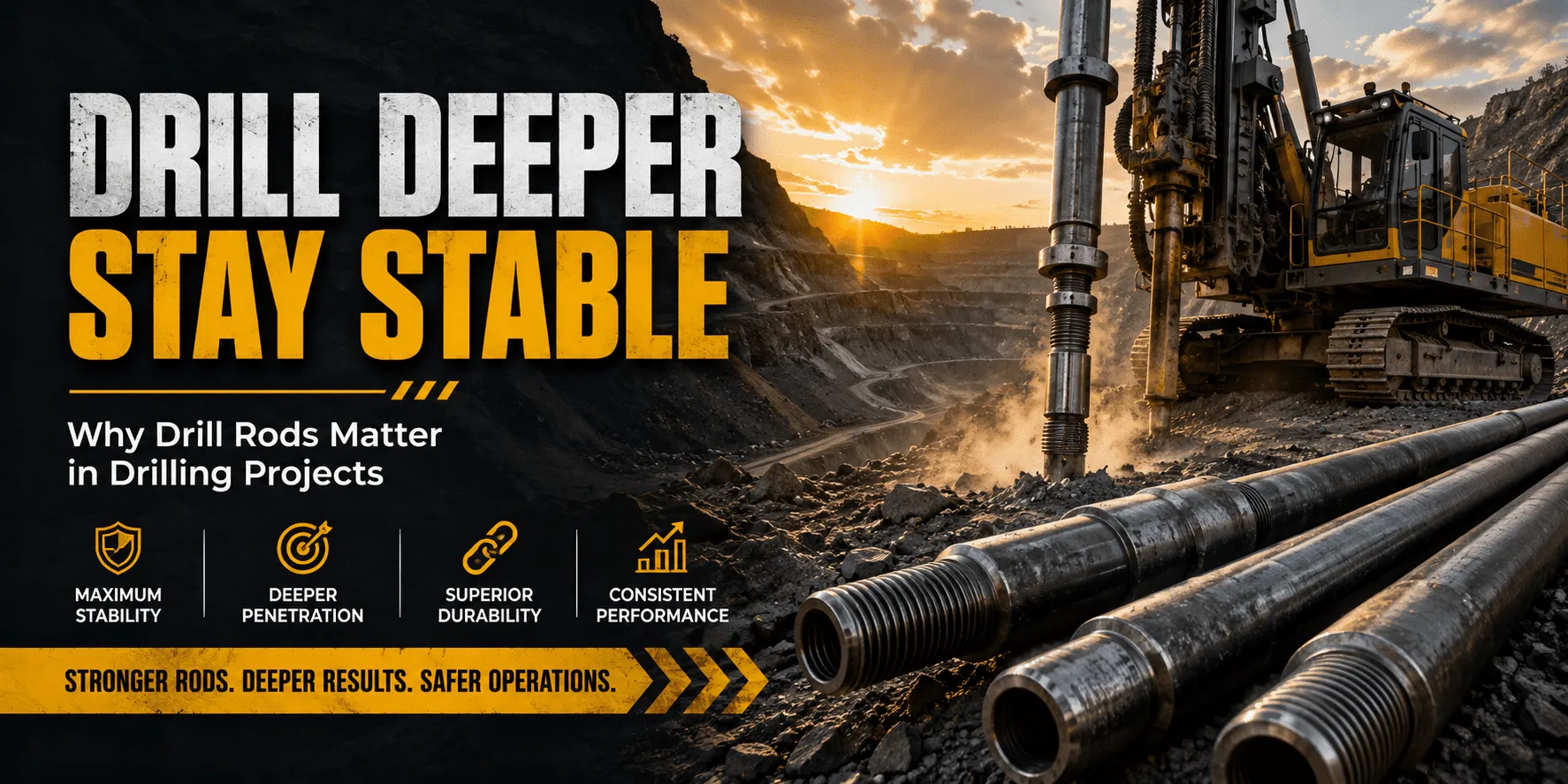
In many drilling projects, buyers first focus on the drilling rig, air compressor, DTH hammer, and drill bit. These parts are important, but one component is often underestimated: drill rods.
Drill rods are not just connecting parts between the drilling rig and the DTH hammer. They affect torque transmission, air delivery, drilling depth, hole stability, tool life, downtime risk, and long-term operating cost.
If drill rods are not selected correctly, even a strong drilling rig and a suitable DTH hammer may not perform well. The project may face unstable drilling, air loss, poor impact transfer, thread wear, rod bending, connection failure, and higher maintenance pressure.
Why Drill Rod Selection Matters in Drilling Projects
A drilling system works as a complete chain. The rig provides rotation and feed force. The air compressor provides air pressure and air volume. The DTH hammer delivers impact energy. The drill bit breaks the rock. The drill rods transfer torque, air, and impact force through the whole system.
If the drill rods are weak, mismatched, or poorly connected, the whole drilling system can lose efficiency. This problem becomes more serious in deeper holes, harder rock, larger hole diameters, and long working hours.
In real drilling projects, drill rod selection should not be treated as a simple accessory choice. It should be considered together with drilling depth, hole diameter, rock condition, DTH hammer size, compressor output, rig capacity, and spare parts planning.
Main Functions of Drill Rods in a DTH Drilling System
Drill rods perform several key functions during drilling. Their performance directly affects whether the drilling system can work smoothly and continuously.
| Drill Rod Function | How It Affects Drilling | Possible Problem if Mismatched |
| Torque Transmission | Transfers rotation from the rig to the drilling tools | Unstable rotation, thread wear, and lower drilling efficiency |
| Air Delivery | Delivers compressed air to the DTH hammer | Air loss, weak hammer impact, and poor cuttings removal |
| Depth Extension | Allows the drilling system to reach the required depth | Rod bending, connection problems, or unstable deep drilling |
| Hole Stability | Supports straight and stable drilling direction | Hole deviation, vibration, and poor hole quality |
| System Strength | Supports working load under hard rock and long operation | Higher breakage risk and more downtime |
Drilling Depth Changes Drill Rod Requirements
Drilling depth is one of the most important factors when choosing drill rods. Shallow drilling and deep drilling do not have the same rod requirements.
For shallow holes, the load on the rod system may be lower. For deeper holes, the drill rods must handle greater torque, longer air delivery distance, stronger connection pressure, and higher stability requirements.
If the rod strength or thread quality is not suitable for deep drilling, the project may face unstable rotation, air leakage, connection wear, or rod failure. This can reduce drilling speed and increase downtime.
| Depth Condition | Rod Selection Focus | Project Impact |
| Shallow Drilling | Basic strength, suitable length, simple maintenance | Supports flexible and cost-efficient operation |
| Medium Depth Drilling | Balanced strength, stable thread, good air delivery | Maintains drilling speed and tool stability |
| Deep Drilling | Higher strength, reliable connection, better straightness | Reduces bending, air loss, and downtime risk |
| Long Working Hours | Wear resistance and spare rod preparation | Improves continuous operation and maintenance planning |
Hole Diameter and Drill Rod Matching
Hole diameter also affects drill rod selection. A larger hole usually requires a larger drill bit and a suitable DTH hammer. This may increase torque demand, air demand, and working load on the rods.
If the drill rods are too small or too weak for the selected hammer and bit, the drilling system may become unstable. If the rods are oversized without real need, the buyer may face higher tool cost and heavier handling pressure.
The correct drill rod should match the hole diameter, hammer size, drilling depth, air compressor output, and rig capacity together. This is why drill rods should not be selected separately from the full drilling equipment package.
Thread Quality and Connection Stability
The thread connection is one of the most critical areas of a drill rod. It must transfer torque, maintain air sealing, and handle repeated connection and disconnection during operation.
Poor thread quality can cause many problems, including air leakage, fast wear, difficult connection, vibration, or even rod failure. In remote quarry, mining, and water well projects, this type of failure can stop the whole drilling operation.
| Thread Factor | Why It Matters | Possible Risk if Poor Quality |
| Thread Accuracy | Ensures smooth and stable connection | Difficult assembly and abnormal wear |
| Thread Strength | Supports torque and working load | Connection damage or rod failure |
| Air Sealing | Helps maintain stable air delivery | Air loss and weak hammer performance |
| Wear Resistance | Supports repeated use under site conditions | Shorter rod life and higher replacement cost |
Air Delivery: Why Drill Rods Affect Hammer Performance
In DTH drilling, compressed air must pass through the drill rods to reach the DTH hammer. If the rod connection is not stable or the air path is not suitable, the hammer may not receive enough air support.
Air loss through poor connections can reduce hammer impact, weaken cuttings removal, and slow down drilling speed. In deeper holes, this problem becomes more serious because the air must travel a longer distance through the rod system.
This is why air compressor matching and drill rod selection should be considered together. A powerful compressor cannot deliver full value if the rod system loses air efficiency during operation.
Rock Condition and Drill Rod Working Load
Different rock conditions create different working pressure on drill rods. Soft formations may require stable speed and good cuttings removal. Hard rock requires stronger impact transfer and higher system strength. Abrasive rock may increase tool wear and connection stress.
In hard rock drilling, the rod system must handle stronger vibration and higher torque. In mixed ground conditions, the drilling resistance may change quickly. If the rods are not suitable, the project may face unstable drilling direction, abnormal wear, or higher breakage risk.
| Rock Condition | Effect on Drill Rods | Selection Focus |
| Soft Formation | Lower load but still needs stable air delivery | Balanced cost and smooth operation |
| Medium-Hard Rock | Moderate torque and vibration | Stable thread and suitable wall thickness |
| Hard Rock | Higher impact load and stronger vibration | Higher strength and reliable connection |
| Abrasive Rock | More wear on tools and connections | Wear resistance and spare rod planning |
| Mixed Ground | Changing resistance during drilling | Flexible tool matching and stable rod configuration |
How Wrong Drill Rod Selection Increases Project Cost
Wrong drill rod selection does not only affect tool performance. It can increase the total cost of the drilling project.
When drill rods are not matched correctly, the project may face slower drilling speed, higher fuel consumption, more tool wear, more downtime, and urgent replacement pressure.
| Problem | Possible Cause | Cost Impact |
| Air Loss | Poor thread sealing or wrong rod matching | Weak hammer impact and lower drilling efficiency |
| Rod Bending | Insufficient strength for depth or rock condition | Unstable hole direction and tool damage risk |
| Fast Thread Wear | Poor connection quality or heavy working load | Frequent replacement and higher maintenance cost |
| Rod Breakage | Wrong rod size, overload, or poor material strength | Serious downtime and possible hole loss |
| Low Drilling Stability | Mismatch between rig, hammer, rods, and bit | Lower productivity and higher operating cost |
Drill Rod Selection for Quarry Drilling
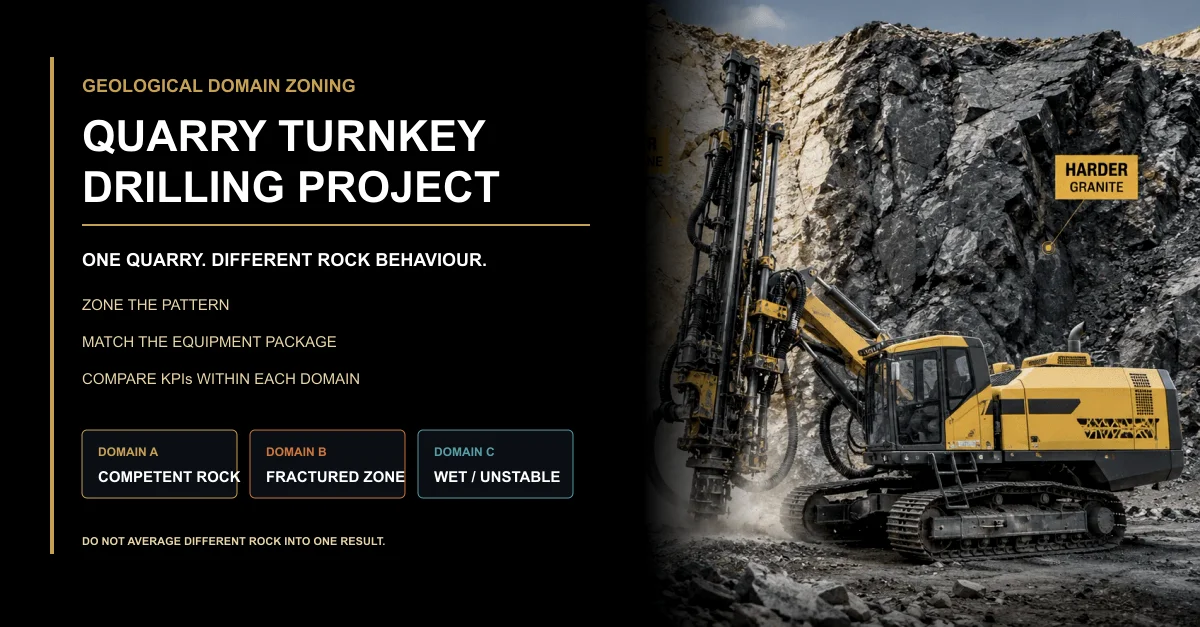
Quarry drilling usually involves limestone, granite, hard rock, blasting holes, and continuous outdoor operation. In this type of project, drill rods must support stable torque transmission, air delivery, and repeated operation under tough site conditions.
For quarry projects, the rod configuration should match the blasting hole diameter, drilling depth, rock hardness, DTH hammer size, air compressor output, and rig capacity.
A practical quarry drilling solution should include not only the drilling rig, but also the correct air compressor, DTH hammer, drill bit, drill rods, and spare parts plan.
Drill Rod Selection for Water Well Drilling
Water well drilling projects often involve changing ground conditions. The drilling team may face soil, gravel, limestone, sandstone, and rock layers in the same hole.
In water well drilling, drill rods must support depth performance, stable air delivery, and reliable connection during long operation. If the rods are not suitable, the project may face air loss, unstable drilling, frequent tool changes, or delayed completion.
A complete water well drilling solution should match drilling rig, air compressor, DTH hammer, drill bit, drill rods, and spare parts according to real ground conditions.
Drill Rod Selection for Mining and Construction Drilling
Mining and construction drilling projects may require different depths, hole diameters, and working angles. Some projects focus on blasting, foundation drilling, slope support, anchoring, or engineering holes.
In these applications, drill rod stability affects hole accuracy, tool life, and project safety. A rod system that is not matched with the rig and hammer may cause vibration, deviation, or higher maintenance pressure.
For special applications, a customized drilling solution can help buyers match the complete equipment package according to site conditions and project goals.
Common Mistakes When Choosing Drill Rods
Many drill rod problems can be reduced if buyers confirm project requirements before selection. The following mistakes are common in drilling equipment purchasing.
| Common Mistake | Possible Problem | Better Solution |
| Choosing rods only by price | Fast wear, air leakage, or unstable connection | Compare strength, thread quality, and service life |
| Ignoring drilling depth | Rod bending or connection pressure in deeper holes | Match rod strength and quantity with required depth |
| Ignoring hammer and bit matching | Poor torque transfer and unstable impact performance | Match rods with DTH hammer, bit, and compressor |
| No spare rod planning | Project may stop when rods are damaged or worn | Prepare spare rods and thread protection parts |
| Using rods without checking site conditions | Wrong configuration for hard rock, deep holes, or remote sites | Confirm rock condition, depth, hole diameter, and working hours first |
What Information Should Buyers Provide Before Selection?
To recommend suitable drill rods and drilling tools, buyers should provide clear project information. This helps avoid general recommendations and improves matching accuracy.
- Project type: quarry, mining, water well, construction, foundation, or exploration
- Required hole diameter
- Required drilling depth
- Rock or ground condition
- DTH hammer model or expected hammer size
- Drill bit diameter and shank type if available
- Air compressor pressure and air volume if already selected
- Drilling rig model or working capacity if available
- Site condition: open quarry, remote area, mountain site, or construction site
- Expected working hours and project duration
- Spare rods and wearing parts requirements
How Welldone Mining Helps Buyers Match Drill Rods
Welldone Mining provides drilling equipment and drilling tools for quarry, mining, water well, construction, and customized drilling projects. We help buyers match drill rods according to real project conditions, not only size or price.
Our support can include drilling rig selection, air compressor matching, DTH hammer and drill bit configuration, drill rod planning, spare parts preparation, delivery support, and after-sales guidance.
| Welldone Mining Support | How It Helps Buyers |
| Project Requirement Analysis | Confirms hole diameter, drilling depth, rock condition, and site environment |
| Drill Rod Configuration | Matches rod size, quantity, and thread type with project needs |
| DTH Tool Matching | Matches DTH hammer, drill bit, drill rods, and compressor support |
| Cost-Oriented Selection | Helps buyers evaluate rod life, downtime risk, and long-term operating cost |
| Spare Parts Planning | Prepares spare rods, adapters, thread protection parts, and wearing parts |
| After-Sales Guidance | Supports technical communication, troubleshooting, and maintenance advice |
Conclusion
Drill rods are not just connecting parts. They are an important part of drilling stability, depth performance, torque transmission, air delivery, and long-term project cost.
For quarry drilling, drill rods must support hard rock operation and continuous production. For water well drilling, they must support depth performance and changing ground conditions. For mining and construction drilling, they must support hole stability, tool matching, and safe operation.
The smarter choice is not only choosing a strong drilling rig. The smarter choice is matching the rig, air compressor, DTH hammer, drill bit, drill rods, and spare parts as one complete system.
If you are planning a drilling project, you can share your project type, hole diameter, drilling depth, rock condition, DTH hammer size, drill bit size, and expected working hours. Welldone Mining can help you match the suitable drilling rig, air compressor, DTH hammer, drill bit, drill rods, spare parts, and after-sales support for your project.
Website: www.welldonemining.com
Email: info@welldonemining.com